
“I Don’t Feel Like Myself”: The Psychological Side of Perimenopause
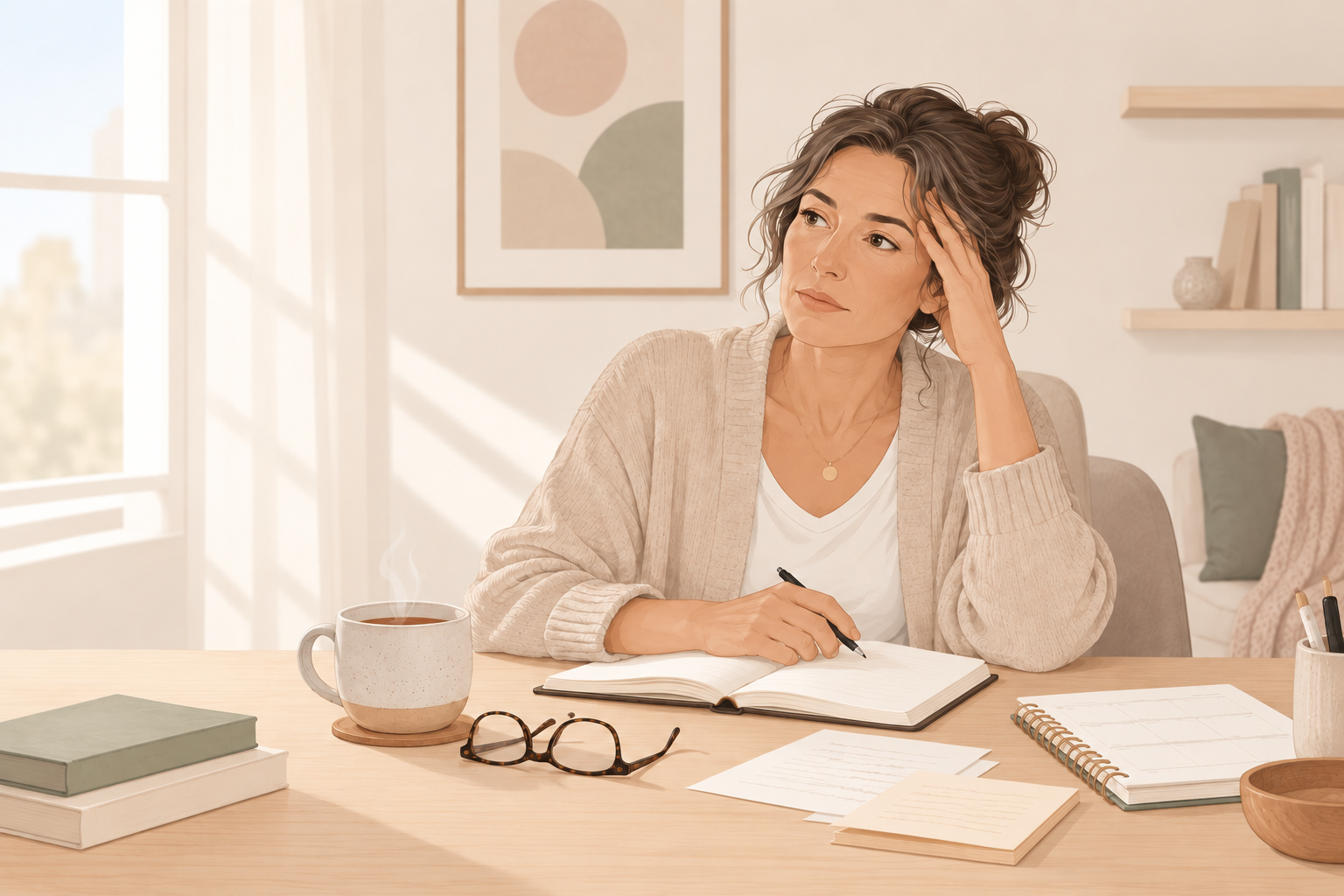
Perimenopause can affect mood, sleep, concentration, energy and your sense of feeling like yourself.
You may still be getting through your days.
You may be working, caring for other people, keeping track of appointments and doing everything that usually needs to be done.
But underneath it, something feels different.
You may be more irritable than usual. Your confidence may have shifted. Decisions that once felt straightforward may suddenly feel overwhelming. You might be forgetting words, losing your train of thought or finding it harder to recover from everyday stress.
For many women, the simplest way to describe it is:
“I just don’t feel like myself.”
This Women’s Health Week, the theme “Do it anyway” encourages women to take small steps towards their health on their own terms. For many women, that first step may simply be acknowledging that something has changed—and that not feeling like yourself deserves attention.
Perimenopause involves more than hot flushes
Perimenopause is often discussed in terms of physical symptoms such as hot flushes, night sweats and changes to the menstrual cycle. These symptoms matter, but they are not always what women find most unsettling.
In a 2024 study of women in the later reproductive and menopausal transition stages, 63.3% reported not feeling like themselves at least half of the time during the previous three months. This experience was most strongly associated with fatigue, reduced capacity to cope, brain fog, anxiety, increased vigilance and changes in mood. It was less closely associated with some of the physical symptoms most commonly linked with menopause.
This helps explain why perimenopause can be difficult to recognise. You may not immediately connect increased worry, emotional sensitivity or difficulty concentrating with hormonal change.
Instead, you may be wondering:
“Why can’t I cope the way I used to?”
“Why am I suddenly so forgetful?”
“Why am I becoming overwhelmed by small things?”
“Why don’t I feel confident in myself anymore?”
“What is wrong with me?”
These questions can become another source of distress, particularly for women who have always seen themselves as capable, organised and dependable.
What may be happening?
Oestrogen acts throughout the brain, including in the hippocampus and prefrontal cortex—regions involved in memory, attention and executive functioning. During perimenopause, hormone levels fluctuate widely rather than declining in a smooth, predictable way. Research suggests that verbal learning and memory may be particularly vulnerable during this transition, although experiences vary considerably between women (Hara et al., 2015; Metcalf et al., 2023; Santoro et al., 2021).
This does not mean every forgotten word or difficult day is caused by hormones. The picture is usually more complex.
Poor sleep can affect concentration and emotional regulation. Ongoing stress can reduce your capacity to cope. Anxiety can consume attention and working memory. Physical symptoms can drain energy. Caring responsibilities, workplace pressure, relationship changes and ageing parents may all be present at the same time.
For some women, previously manageable ADHD traits or executive-functioning difficulties may also become more noticeable. Systems that once helped them stay organised may no longer feel sufficient when sleep disruption, cognitive load, mood changes and hormonal fluctuations begin interacting.
The result can feel like a loss of competence, even when it may be your capacity—not your underlying ability—that has temporarily changed.
Why it can affect your sense of identity
The psychological impact of perimenopause is not limited to feeling anxious or low. It can also affect how you see yourself.
If you have built your identity around being productive, composed or able to manage everything, a change in your capacity may feel deeply personal.
If you’re finding it difficult to concentrate, that may be interpreted as evidence that you are becoming less capable. Feeling annoyed and irritable may leave you feeling guilty and unlike the person you want to be. As a high functioning individual, needing more rest can also feel uncomfortable when you are accustomed to pushing through.
You may respond by trying harder—working longer, checking more, concealing how overwhelmed you feel or becoming increasingly critical of yourself. This can create a difficult cycle:

The reduced capacity cycle during perimenopause: increased effort and self-pressure can reduce recovery, deepen exhaustion and further diminish capacity.
You have not suddenly become lazy, weak or incapable. Your mind and body may be managing a different combination of demands, and the strategies that worked previously may need to change.
What can help?
The first step is developing a clearer picture of what is happening. Hormonal changes may be one part of that picture, alongside sleep, stress, physical health, mental health and the demands of everyday life. A psychologist can support you to make sense of how these different factors may be interacting, identify patterns contributing to distress and consider practical strategies suited to your individual circumstances.
Notice the patterns
Tracking changes in your mood, sleep, menstrual cycle, energy, concentration and physical symptoms can help you identify patterns and communicate them more clearly to your healthcare provider.
You might consider:
When did I first notice that I did not feel like myself?
Which changes are affecting me most?
Are my symptoms constant, or do they fluctuate?
What happens to my coping when my sleep is disrupted?
Which demands now require more effort?
What helps me feel clearer, steadier or more connected to myself?
The aim is to gather useful information, not to monitor yourself perfectly.
Reduce the load on your brain
When concentration and working memory feel less reliable, expecting yourself to simply “try harder” is rarely helpful.
External supports can reduce the amount your brain is being asked to hold. This might include using reminders, writing down decisions, simplifying routines, breaking larger tasks into clear steps and allowing time to recover after demanding days.
Using support does not mean you are failing. It is a practical response to your current capacity.
Pay attention to your internal language
Notice whether your mind is telling you:
“I should be able to manage this.”
“I never used to struggle with this.”
“Everyone else seems to be coping.”
“I just need to push through.”
“I’m letting everyone down.”
These thoughts can increase shame and make it harder to respond constructively.
A more helpful question may be:
“What has changed, and what support do I need now?”
This shifts the focus away from personal failure and towards understanding what your mind and body may be asking of you.
Seek the right support
You do not need to make sense of these changes on your own. A psychologist can support you to understand how hormonal changes, sleep, stress, physical health and everyday demands may be interacting, while developing practical ways to manage the emotional and cognitive impact.
Support may focus on:
managing anxiety, irritability and emotional overload;
improving sleep-related habits;
reducing self-criticism and unrealistic expectations;
developing practical supports for memory and executive functioning;
adjusting routines to reflect your current capacity; and
navigating changes in confidence, relationships and identity.
Psychological support may sit alongside care from a GP or another health professional with an interest in perimenopause and women’s health. It is worth seeking medical advice if your symptoms persist, worsen, disrupt your sleep or begin affecting your work, relationships or everyday functioning.
You are still yourself
Not feeling like yourself can be unsettling. When your mood, energy, memory or ability to cope changes, it can be difficult to know whether the change is temporary—or whether you are losing an important part of who you are.
A change in capacity is not the same as a loss of identity. Your experience, values, qualities and abilities are still yours. What may need to change is how much you expect yourself to carry, how you respond to your symptoms and the support you allow yourself to receive.
During Women’s Health Week, consider one practical step towards understanding what you need. This might mean tracking your symptoms, finding a healthcare professional who takes your concerns seriously, making more space for rest or seeking psychological support.
You do not need to wait until things become unmanageable, and you do not need to have everything figured out before asking for support.
At Axis Within Psychology, we take a whole-person approach. This means considering how sleep, stress, physical health, eating patterns, daily routines, relationships, identity and everyday demands may be interacting with your psychological wellbeing. Psychological support may help you make sense of these changes, reduce unhelpful self-pressure and develop practical strategies that reflect your current circumstances.
References
Coslov, N., Richardson, M. K., & Woods, N. F. (2024). “Not feeling like myself” in perimenopause—What does it mean? Observations from the Women Living Better survey. Menopause, 31(5), 390–398. https://doi.org/10.1097/GME.0000000000002339
Hara, Y., Waters, E. M., McEwen, B. S., & Morrison, J. H. (2015). Estrogen effects on cognitive and synaptic health over the lifecourse. Physiological Reviews, 95(3), 785–807. https://doi.org/10.1152/physrev.00036.2014
Metcalf, C. A., Duffy, K. A., Page, C. E., & Novick, A. M. (2023). Cognitive problems in perimenopause: A review of recent evidence. Current Psychiatry Reports, 25(10), 501–511. https://doi.org/10.1007/s11920-023-01447-3
Santoro, N., Roeca, C., Peters, B. A., & Neal-Perry, G. (2021). The menopause transition: Signs, symptoms, and management options. The Journal of Clinical Endocrinology & Metabolism, 106(1), 1–15. https://doi.org/10.1210/clinem/dgaa764
Jean Hailes for Women’s Health. (2026). Women’s Health Week. https://www.jeanhailes.org.au/get-involved/womens-health-week/
Healthdirect Australia. Mental health and menopause. https://www.healthdirect.gov.au/mental-health-and-menopause